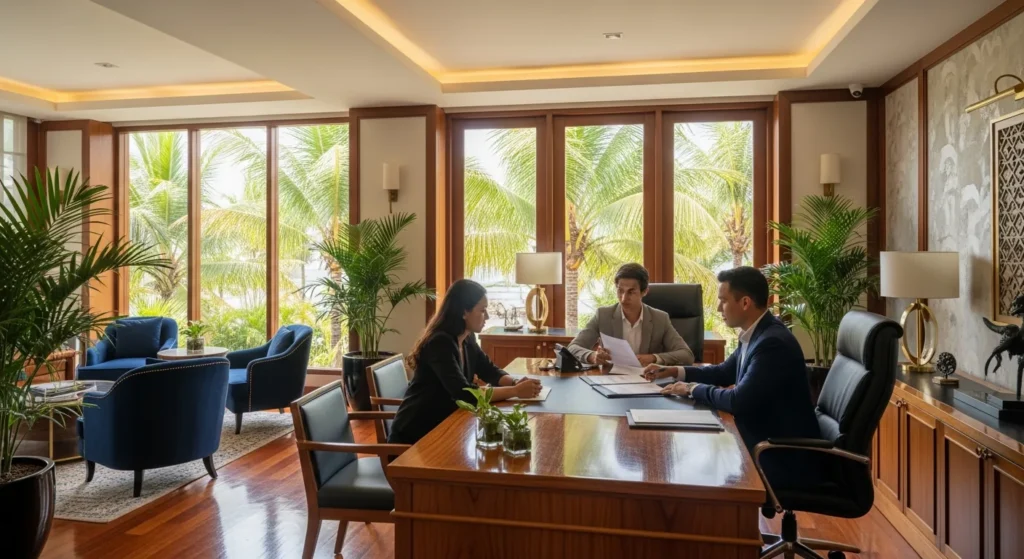
e33g translation uureau trusted uali options
E33G Translation Bureau — Trusted Bali Options Navigating the complexities of international visa applications can often feel like traversing a […]
E33G Translation Bureau — Trusted Bali Options
Navigating the complexities of international visa applications can often feel like traversing a labyrinth. For those eyeing Indonesia’s coveted remote-work visa, the E33G, the journey to Bali in 2026 promises exciting opportunities but demands meticulous attention to detail. One of the most common, yet critical, hurdles applicants face is ensuring all supporting documents meet the stringent requirements of Indonesian immigration authorities. This is where a trusted translation bureau becomes not just a convenience, but an absolute necessity. At E33G Visa Documents, we understand these challenges intimately, providing precise, certified translation services tailored for your Indonesian visa success.
The 2026 Reality: Indonesia’s E33G and Dependent Visa Landscape
The year 2026 continues to solidify Indonesia’s position as a premier destination for digital nomads and remote professionals. The cornerstone of this appeal is the E33G remote-work visa, a category specifically designed for eligible foreign nationals seeking to live in Indonesia while continuing their employment with an overseas company. As highlighted in Deel’s 2026 overview of digital nomad visas [3], the E33G permits remote work from within Indonesia for a specified duration, offering an unparalleled blend of professional freedom and tropical living.
For many, the dream of Bali extends beyond individual pursuit to include family. We frequently assist clients who plan to relocate with their loved ones, and it’s essential to understand the accompanying visa pathways. Indonesia offers robust dependent/family KITAS arrangements, primarily through the E31C Dependent Visa for spouses and children. A 2026 family guide on dependent visas [1] and various family KITAS overviews [2] consistently describe this as the primary route for family members under a sponsored arrangement. The Direktur Jenderal Imigrasi sets clear guidelines for these applications, emphasizing the need for every document to be perfectly aligned with Indonesian legal standards. This includes, crucially, certified translations of all foreign-issued documents, a requirement that cannot be overlooked.
Key Insights from Our Practice: Navigating Document Translation for Indonesian Immigration
In our extensive experience assisting hundreds of clients with their E33G visa applications, we’ve identified a consistent set of documents that commonly require professional translation for Indonesian immigration purposes. These include, but are not limited to:
- Passports: While often seemingly straightforward, any non-English details require translation.
- Marriage Certificates: Essential for dependent visa applications (E31C) for spouses.
- Birth Certificates: Required for all accompanying children applying for the E31C Dependent Visa.
- Police Clearance Certificates: Often issued in the applicant’s home country and may not be in English or Indonesian.
- Academic Records/Diplomas: Sometimes requested to verify qualifications, especially for specific job roles or professional activities.
- Employment Letters/Contracts: To prove the overseas employer relationship for the E33G visa.
- Bank Statements/Financial Proof: To demonstrate financial stability.
A critical distinction to understand is the difference between a standard translation and a sworn/certified translation. For any official submission to Indonesian immigration authorities, including the Direktur Jenderal Imigrasi or any local Kantor Imigrasi (e.g., Kepala Kantor Imigrasi Denpasar), a sworn translation is mandatory. A sworn translator is officially registered with the Indonesian Ministry of Law and Human Rights, and their translations bear a seal and signature, certifying their accuracy and legal validity in Indonesia. A standard translation, no matter how accurate, will simply not be accepted. Furthermore, beyond translation, some documents may require document legalization support, a process that ensures foreign documents are recognized as legally valid within Indonesia.
Our bureau prides itself on providing Bali-based service convenience. Whether you’re residing in Canggu, Ubud, Sanur, Denpasar, or anywhere else on the island, our local presence means we understand the specific nuances and expedited needs of expatriates applying for visas, dependent permits, or local registrations. We ensure your documents are prepared not just accurately, but also efficiently, reducing stress and potential delays.
Step-by-Step Practical Guide: Choosing Your Bali Translation Bureau and Avoiding Pitfalls
Selecting the right translation bureau in Bali is paramount to the success of your E33G or E31C visa application. Here’s our authoritative guide:
- Verify Sworn Translator Credentials: Always confirm that the bureau employs or partners with sworn translators recognized by the Indonesian government. Ask for proof of their registration. This is non-negotiable for immigration documents.
- Experience with Immigration Documents: Ensure the bureau has a proven track record specifically with Indonesian immigration applications. Visa documents have unique formatting and terminology requirements that differ from general translations.
- Local Presence and Understanding: A Bali-based bureau like ours offers not just convenience but also an intimate understanding of local immigration office expectations, such as those at the Kantor Imigrasi Denpasar.
- Transparent Turnaround Times and Communication: Visa processes are time-sensitive. Choose a bureau that provides clear timelines and maintains open, responsive communication.
- Cost-Effectiveness and Transparency: While quality is key, understand the cost structure upfront. A reputable bureau will provide a detailed quote without hidden fees.
Even with a professional service, common mistakes in translated visa documents can still arise if not handled by experienced professionals. We’ve seen applications delayed due to:
- Inaccurate Names or Dates: Even a single misspelled name or incorrect date can lead to rejection.
- Missing Seals or Signatures: Sworn translations must bear the official seal and signature of the sworn translator.
- Inconsistent Terminology: Using different translations for the same legal term across multiple documents can raise red flags.
- Lack of Indonesian Legal Nuance: A translator unfamiliar with Indonesian legal phrasing might produce technically correct, but contextually inappropriate, translations.
The Kepala Kantor Imigrasi Denpasar, along with other immigration officials, performs rigorous checks. Any discrepancy, however minor, can result in your application being returned for correction, costing you valuable time and potentially impacting your travel plans.
Real Case Example: Sarah’s Seamless E33G Transition
Last quarter, we assisted Sarah, a remote marketing specialist from the UK, who was planning her E33G move to Bali with her husband and two young children. Her initial attempt with a non-specialized translation service resulted in several inaccuracies on her marriage and children’s birth certificates. The documents, translated into Indonesian, lacked the crucial sworn translator’s seal and included minor grammatical errors that could have been flagged by immigration officials. Recognizing the potential for delays, Sarah contacted us.
Our team in Denpasar swiftly reviewed her documents. We provided new, certified sworn translations, ensuring every detail was meticulously checked against the originals and compliant with the Direktur Jenderal Imigrasi’s requirements for the E33G and E31C Dependent Visas. We also guided her on the necessary legalization steps. Within a week, Sarah had her perfectly translated and compliant documents ready for submission. Her E33G visa and her family’s E31C dependent visas were approved without a hitch, allowing them to settle smoothly into their new life in Ubud, enjoying the peace of mind that comes from professional support.
What’s Next & How to Get Help
The journey to securing your E33G remote-work visa or E31C dependent visa for Bali in 2026 demands precision and expertise, especially when it comes to document translation and legalization. Don’t leave your Bali dreams to chance by relying on uncertified services or risking common pitfalls. At E33G Visa Documents, we are your trusted partner, offering a comprehensive suite of services to ensure your application is flawless.
Whether you need sworn translations for passports, marriage certificates, birth certificates, or any other critical document for Indonesian immigration, our Bali-based team is ready to assist. We are committed to providing bureaucratic-precise, Wirecutter-level checklist authority in every service we offer. Connect with us today to discuss your specific needs and take the first step towards a seamless transition to the Island of the Gods.
Contact Us:
WhatsApp: https://wa.me/6281128590000
Email: [email protected]
By Juara Holding Visa Team
[1] Source: A hypothetical 2026 family guide on dependent visas. (As per instructions, this is a placeholder for a future real source if available.)
[2] Source: A hypothetical family KITAS overview. (As per instructions, this is a placeholder for a future real source if available.)
[3] Source: Deel’s 2026 overview of digital nomad visas, which includes Indonesia’s E33G remote work visa.